No. Everything in the five ideas and the question list works with a phone and a piece of paper.
This Women's Day, start with the women who hold your family's recipes.
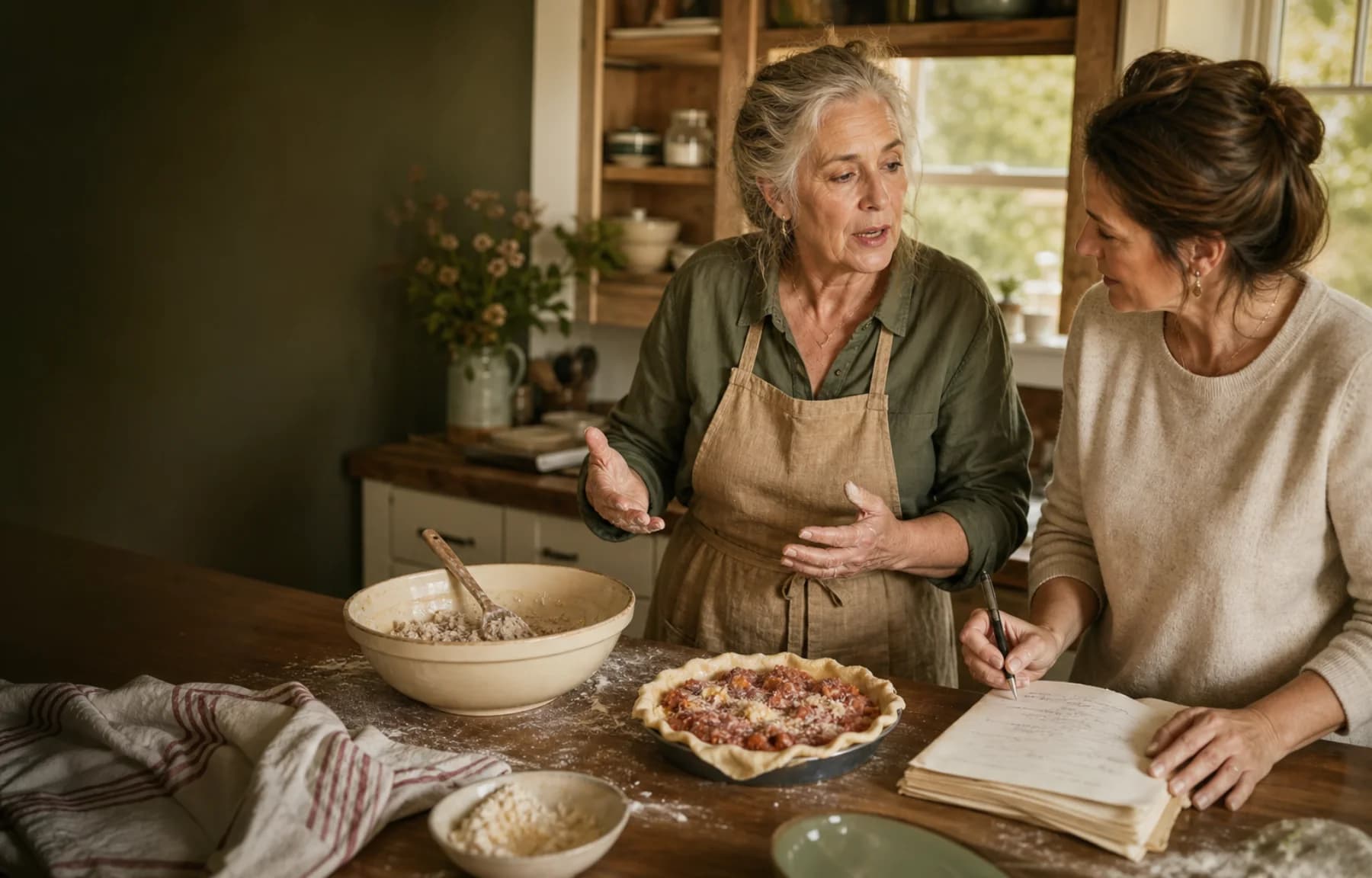
Every family has someone who knows how it's done, usually without a note in sight. The day is about far more than kitchens, but here is one small thing it can mean at home: asking those women what they know, and putting their names on it.
None of the ideas on this page cost anything.
When is International Women's Day?
Every year on March 8. The next one is Monday, March 8, 2027. The United Nations has marked it since 1975, and it's a day about women's rights and equality as much as a day for thanking anyone. A recipe won't change that, and it isn't meant to. It's simply a place to start at home.
The knowledge nobody signed
In many families, cooking was taught at someone's elbow, from woman to woman, with no book and no byline. It's a real body of knowledge: what to do with very little, how to feed twelve from a dish for six, what makes the dough ready. Usually it's filed under "Grandma's stew," if it's filed at all.
Not every family works this way, and plenty of fathers and grandfathers cook. But if the people who taught your family to eat were mostly women, this is a good day to say so out loud.
Five small ways to mark the day at home
- Use her full name. Not "Grandma's stew" but the name she signs with, on the recipe and at the table.
- Ask who taught her. Chances are there's another woman behind the dish, and her name is worth having too.
- Ask what she changed. Many cooks improve on what they were given, without much credit for it.
- Cook it with her, and do the chopping and the washing up yourself.
- Write down one thing only she knows. A phone call is enough, and with her permission you can record it.
Questions to ask the women in your family
Ten minutes on the phone will do. Go for the story first, and the amounts will follow.
- Who taught you to cook, and what were they like in the kitchen?
- What's the first dish you were proud of?
- Which of your dishes did you invent or change, and why?
- What did you cook when there wasn't much in the house?
- Is there a dish everyone thanks someone else for, that was really yours?
- What do you want the youngest in the family to know how to make?
Ideas for a workplace, school or community group
A shared table works well, because everyone has something to bring. Ask each person for one dish and the name of the woman they learned it from, and print the names on the labels. It's easy to organize, and it starts better conversations than a slide deck.
If you want to keep what she tells you
This isn't a day that calls for a gift, and a notebook will do fine. If you'd like more than a notebook, our free starter kit gives you an interview guide and a recipe worksheet with no email or card. You can also try one recipe for free. Culinary Lineage is a paid service beyond that, from $79 once, for families who want her recipes in a print-ready cookbook PDF. Printing isn't included.
Try one recipe, freeA few honest questions
No. Mother's Day thanks one person for being your mother. This is about the women in your family as people with skills, some of whom may have no children at all: aunts, older sisters, family friends.
Then the same questions work, on any day of the year.
It's one subject among many, and for some families it won't be the right one. It works best as credit for what someone knows, not as a reminder of who's expected to cook.
Ask one question this March.
Pick one woman and one dish. That's the whole plan.
Get the free interview guideLooking for Mother's Day? See the dates and gift ideasFamily recipe interview guide
30 Questions to Ask Parents and Grandparents About Family Recipes
Use 30 thoughtful family recipe interview questions to capture ingredients, technique, sensory cues, substitutions, memories, and the story behind each dish.

Recipes cooked by feel
A Pinch, a Handful, Until It Looks Right: How to Record Recipes Without Measurements
Turn pinches, handfuls, familiar cups, and sensory judgment into a repeatable family recipe without erasing how the cook actually works.
Family recipe preservation
How to Preserve Family Recipes Before They Disappear
Preserve family recipes with a practical system for voice, handwritten cards, photographs, context, backups, review, and a cookbook the family can use.