A family cookbook is not mainly a design project. It is a coordination project: deciding what belongs, helping relatives contribute, checking recipes, identifying photographs, and finishing a usable book before enthusiasm disappears.
This process works for a ten-recipe keepsake or a hundred-recipe family archive. Set the scope first, complete one recipe as a model, then collect in small batches. A finished modest book can grow later; an unlimited project rarely finishes.
Plan before collecting
- Choose audience, purpose, recipe count, format, deadline, and decision-maker.
- Complete one model recipe before inviting everyone.
- Give contributors one clear request and more than one way to respond.
- Separate collection, recipe review, design, proofing, and printing.
- Keep original materials and permissions alongside the finished book.
1. Define the book in one sentence
Write a sentence that names the people, material, and purpose: ‘A private, printable collection of twenty recipes told by Rosa and her three children for the grandchildren.’ This protects the project from becoming every family photograph, every genealogy fact, and every recipe anyone has saved online.
Choose one editor who resolves duplicated recipes, naming, deadlines, and layout decisions. Consultation can be shared; accountability cannot be vague.
| Decision | Practical options | Good default |
|---|---|---|
| Recipe count | 10, 20, 50, or 100 | Start with 20 |
| Contributors | One cook, one branch, or whole family | Invite the people tied to chosen recipes |
| Output | Private website, PDF, home print, or print shop | High-resolution PDF plus backup |
| Deadline | Birthday, reunion, holiday, or no fixed event | Set an editorial deadline before print deadline |
2. Finish one model recipe
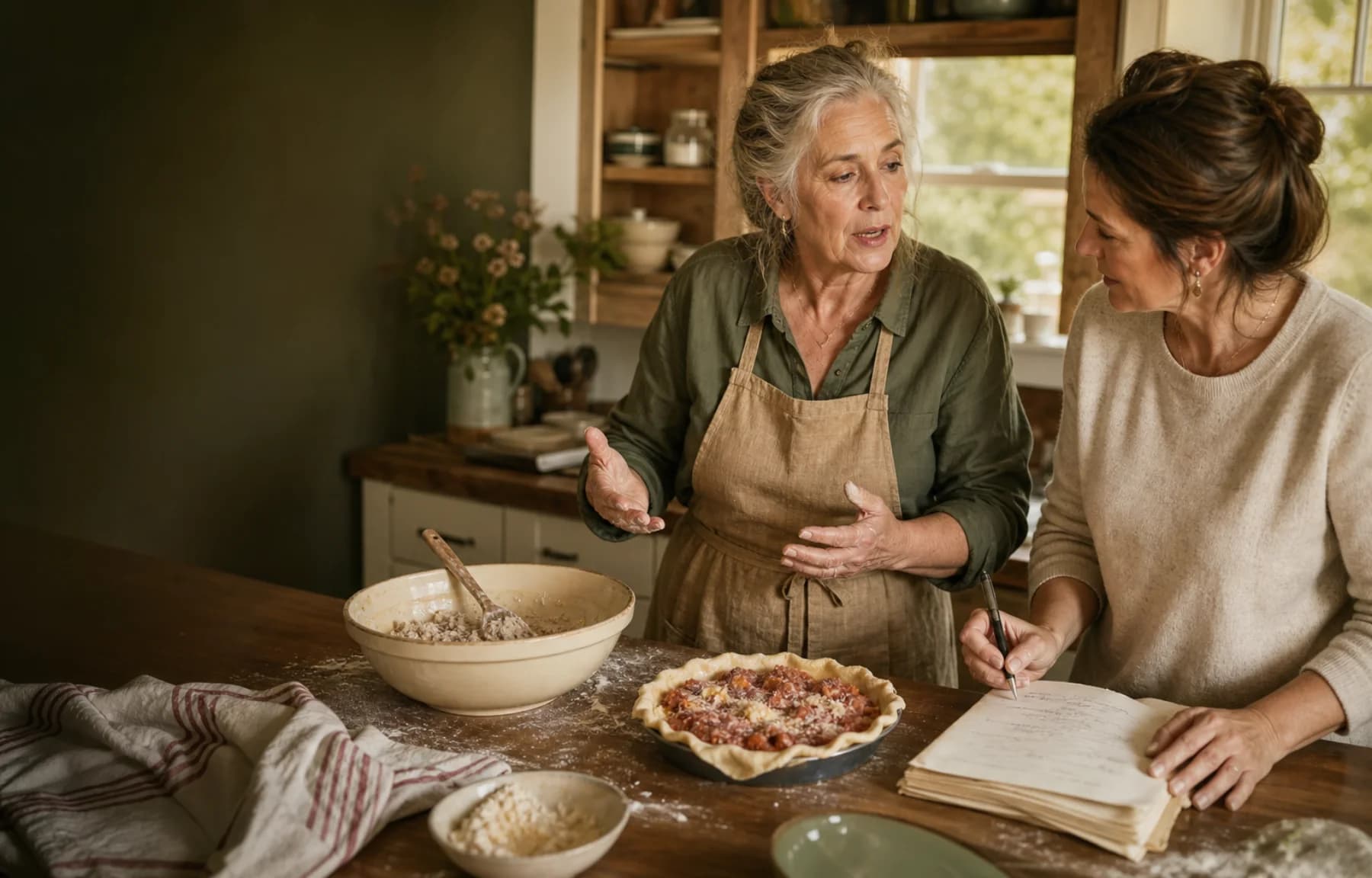
Select a representative recipe and take it through the entire process: source capture, conversation, transcription, missing-detail questions, family approval, photograph, and final page. This exposes how long the work takes and gives contributors a concrete example.
The model should demonstrate what ‘finished’ means: a title, attribution, yield, ingredients, ordered steps, sensory cues, substitutions where known, a short family note, and a clearly credited image. Do not demand more information from others than the model contains.
3. Collect recipes without making relatives manage your project
Send a personal request with the exact recipe, reason, response method, and date. ‘Could you tell me your chicken soup recipe by September 20? You can use this private voice link, call me, or send a photo of the card’ is easier than ‘Please contribute to our cookbook.’
Track status privately: invited, source received, questions open, approved, photo ready, page proofed. Reminders should be gentle and should never expose another person’s unfinished recipe.
- Offer voice, phone, typed text, or a card photograph.
- Ask for one or two named recipes, not an unlimited contribution.
- Explain whether recordings and stories stay private.
- Record how each person wants their name shown.
- Accept ‘not now’ without pressure; the book can have a later edition.
30 Questions to Ask Parents and Grandparents About Family Recipes
4. Edit for cookability, then return decisions to the cook
Standardise structure, not personality. Put ingredients in order of use, separate steps, expand unclear abbreviations, and identify missing quantities. Keep regional terms with a short explanation when needed. Never silently replace a family method with a generic internet recipe.
Have the contributor review the meaning. Then let a less familiar cook test a selection of recipes. Every hesitation becomes a specific question: pan size, heat level, texture, sequence, storage, or yield.
5. Organize before designing pages
Choose a structure that helps the reader find recipes: by course, occasion, person, generation, or place. Make the table of contents before styling. Long stories can open chapters; recipe pages should remain easy to scan while cooking.
Use a limited page system: cover, contents, chapter opener, recipe with photograph, recipe without photograph, and family-story page. Consistency reduces proofing errors and makes different contributors feel part of one book.
How to Organize a Family Cookbook: Eight Structures That Actually Work
6. Proof content and print separately
Run two proofs. Content proof checks names, ingredients, sequence, captions, permissions, and missing pages. Print proof checks margins, image quality, page breaks, spine, binding, paper, and whether the book stays open in a kitchen.
Print or inspect a full-size physical proof before ordering multiple copies. Screens hide small type, tight gutters, dark photographs, and pages that feel crowded. Keep the final PDF and source materials even if a printer stores the project online.
Family cookbook planning questions
How long does a family cookbook take?
A focused twenty-recipe PDF can be assembled in several disciplined weeks, but family response time and recipe checking usually control the schedule. Printing and shipping need a separate buffer.
Does every recipe need a photograph?
No. A few strong family and food photographs can create rhythm. A forced generic image on every page can make the book less personal and harder to finish.
Who should approve the final recipe?
The person who contributed or is most closely associated with that version should approve meaning and attribution. The editor controls consistency, not ownership of the story.
Can we add more recipes later?
Yes if you preserve structured source files and use edition dates. Finish a coherent first edition rather than delaying it for every possible contribution.
Finish one edition, then let the book grow
Strong family cookbooks feel generous because they are selective, checked, and easy to use. Define the book, finish a model, collect named recipes, ask about gaps, proof on paper, and preserve the sources. The result can be modest and still become an heirloom.